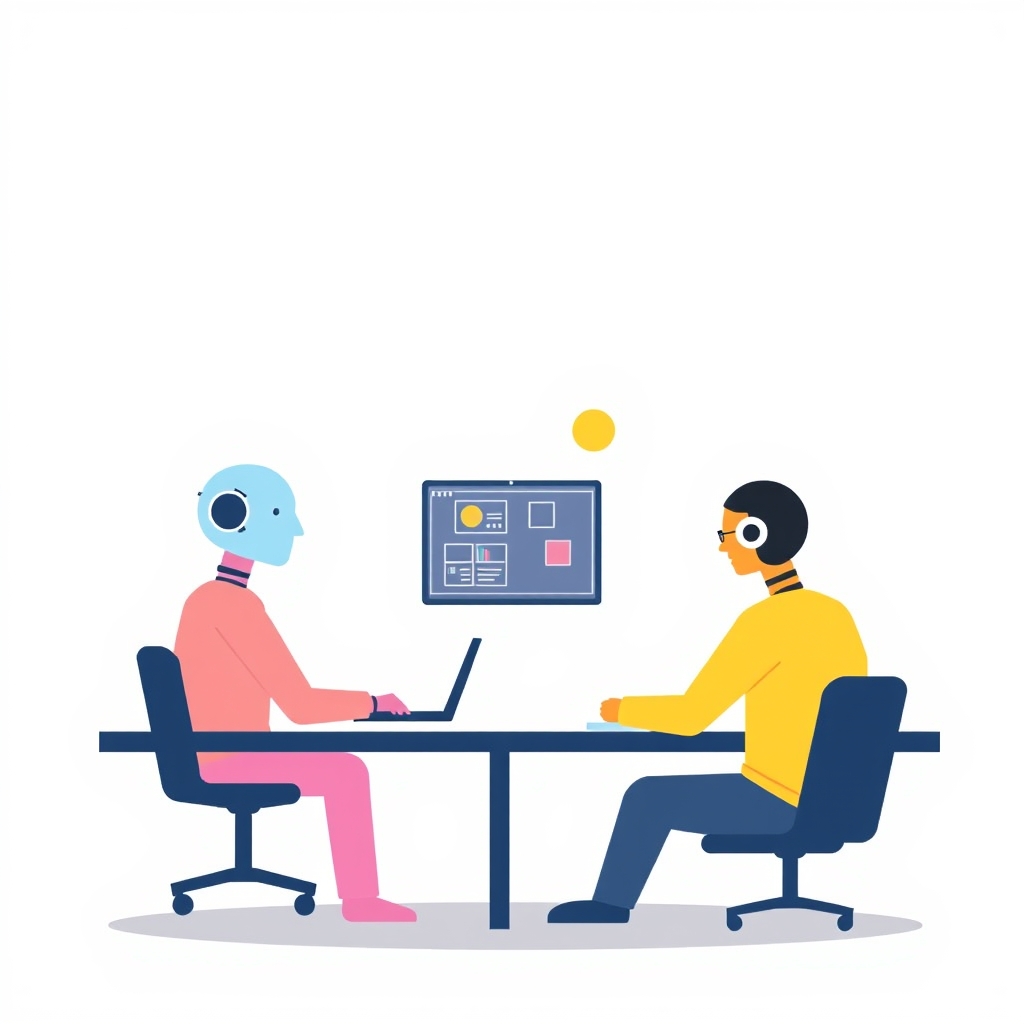
“Researchers examined human-AI collaborative teams using the Collaborative Gym environment to understand when adding human collaborators improves AI performance and when coordination costs become counterproductive. The findings highlight the critical balance between leveraging human expertise and managing the overhead of collaboration, offering insights for designing effective shared-workspace systems.”
Key Takeaways
- Human-AI teams don't always outperform solo agents; context and task type matter
- Process loss from coordination can offset gains from human expertise
- Identifying optimal task division between humans and AI is crucial
Study reveals how human-AI collaboration optimizes shared workspace performance on complex tasks.
trending_upWhy It Matters
As AI agents become more capable, understanding how to effectively integrate human judgment remains essential for complex scientific and professional work. This research provides a framework for determining when collaboration adds value versus creating overhead, helping organizations design more efficient human-AI teams. The findings have immediate applications for scientific research, software development, and other domains requiring specialized human insight.
FAQ
When should teams add humans to AI agents?
When tasks require contextual expertise and judgment that AI lacks, but only if coordination overhead doesn't exceed the performance gains from human input.
What is 'process loss' in human-AI collaboration?
Process loss refers to efficiency costs from coordination and communication between human and AI collaborators that can reduce overall team performance.