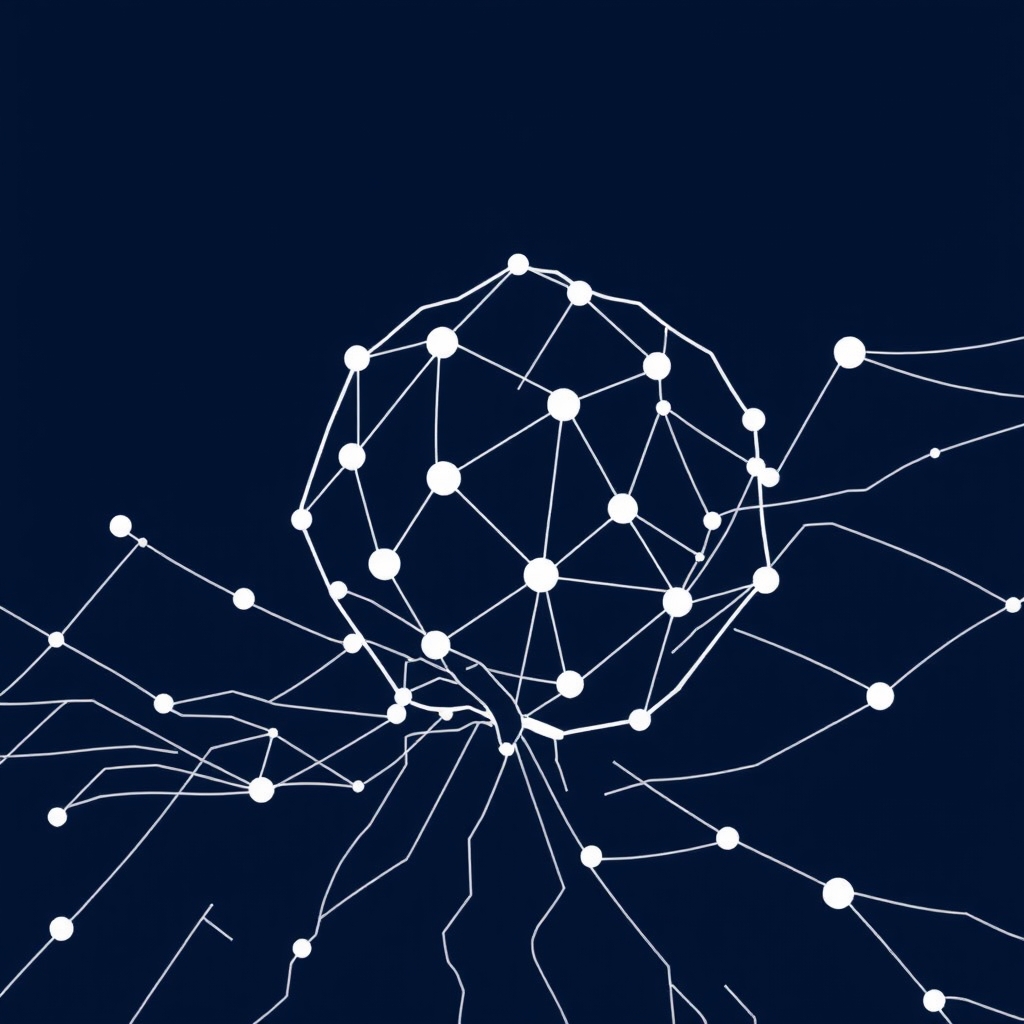
“Neural networks are computing systems inspired by biological brains, using interconnected nodes to learn patterns from data. They're the foundation behind most modern AI breakthroughs, from image recognition to language translation. Understanding neural networks helps explain how machines can now perform tasks that once seemed uniquely human.”
A neural network is a computing system loosely inspired by the way biological brains process information. Just as your brain contains billions of interconnected neurons that fire signals to each other, artificial neural networks consist of interconnected nodes (called artificial neurons) that pass mathematical signals through layers of processing. Think of it like a sophisticated pattern-matching machine. When you show a neural network thousands of photos labeled 'cat' or 'dog,' it gradually learns to identify the subtle patterns that distinguish cats from dogs—whisker shapes, ear positions, facial structures. Unlike traditional programming where you write explicit rules, neural networks discover these patterns on their own through exposure to examples. What makes neural networks powerful is their ability to handle complex, messy real-world data. They excel at tasks that are easy for humans but traditionally difficult for computers: recognizing faces, understanding speech, translating languages, or predicting what movie you might enjoy next.
How It Works
A neural network processes information through layers of artificial neurons, each performing simple mathematical calculations. The input layer receives raw data—perhaps pixels from an image or words from a sentence. This information flows forward through one or more hidden layers, where each neuron applies a mathematical function to the signals it receives, then passes the result to the next layer. Finally, the output layer produces the network's prediction or classification. The magic happens through learning from examples. Initially, the network makes random guesses and performs poorly. But during training, it compares its predictions to the correct answers and adjusts the strength of connections between neurons (called weights) to improve performance. This process repeats thousands or millions of times until the network becomes skilled at the task. It's like learning to play basketball—you start by missing most shots, but through practice and feedback, you gradually improve your aim. The 'neural' part isn't just marketing—these systems genuinely share principles with biological brains. Both use interconnected processing units, both learn from experience, and both can recognize patterns and make predictions. However, artificial neural networks are much simpler than biological brains and typically focus on specific, narrow tasks rather than general intelligence.
trending_upWhy It Matters
Neural networks represent a fundamental shift in how we approach computing problems. Traditional software requires programmers to explicitly code every rule and decision path. Neural networks instead learn patterns directly from data, making them invaluable for tasks where the rules are too complex to code by hand—like understanding human speech or identifying objects in photos. This capability has unlocked entirely new categories of applications that seemed like science fiction just decades ago. Today, neural networks power the AI systems we interact with daily. Every major tech company relies on them: Google uses neural networks for search and translation, Netflix for recommendations, Tesla for autonomous driving, and OpenAI for language models. Without neural networks, we wouldn't have voice assistants, automatic photo tagging, real-time translation, or modern AI chatbots. They've become the engine driving the current AI revolution, enabling machines to perform increasingly sophisticated tasks that augment human capabilities.
Real-World Examples
- Google's search engine uses neural networks to better understand search queries and rank billions of web pages, dramatically improving search result relevance since 2015.
- Tesla's Full Self-Driving system relies on neural networks to process camera feeds and make real-time driving decisions, identifying pedestrians, traffic signs, and road conditions.
- DeepMind's AlphaFold uses neural networks to predict protein structures, solving a 50-year-old biology problem and accelerating drug discovery research worldwide.
- Netflix employs neural networks to analyze viewing patterns and recommend content, with their recommendation system driving over 80% of viewer engagement on the platform.
FAQ
How are neural networks different from regular computer programs?expand_more
Do neural networks actually work like human brains?expand_more
Why do neural networks need so much data to work well?expand_more
Can neural networks make mistakes or be biased?expand_more
Related Terms
This explainer was AI-generated based on publicly available information and may not reflect the most recent developments. For the latest details, consult the sources below.