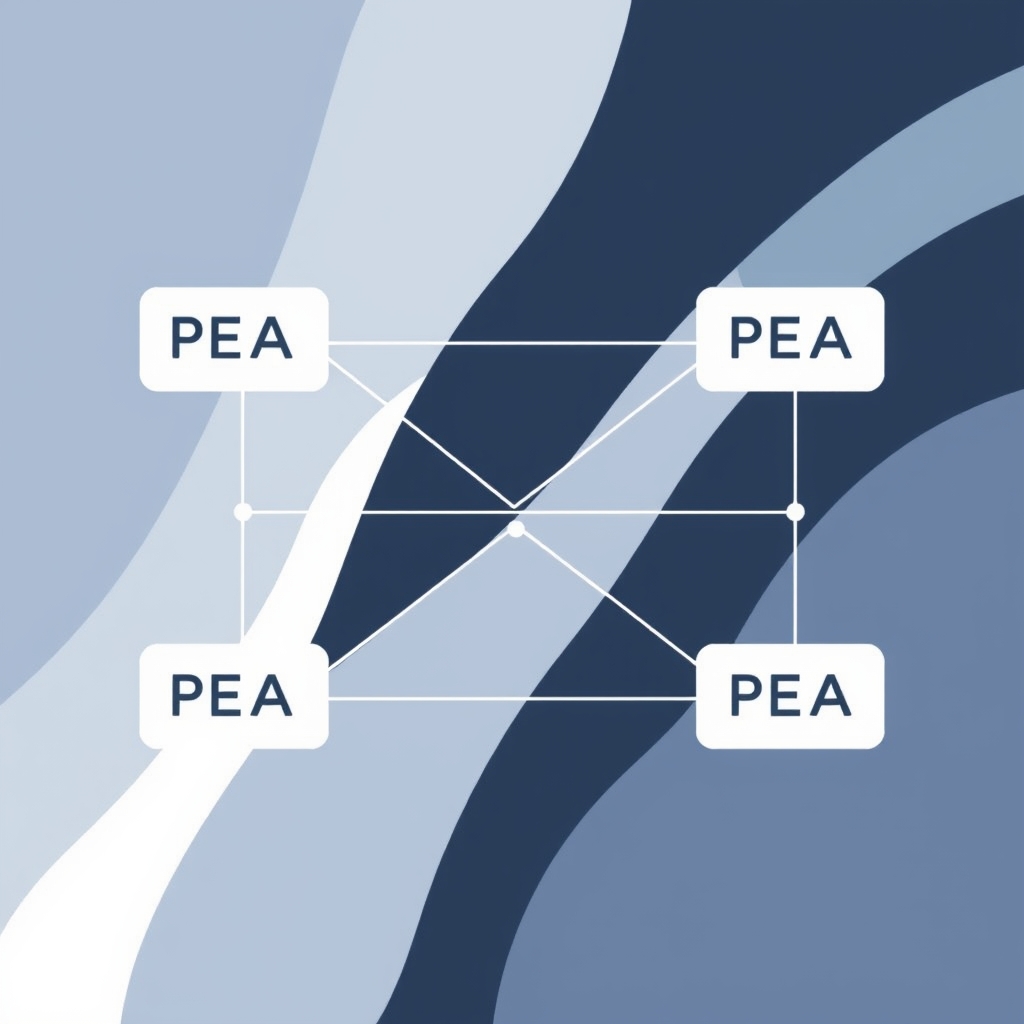
“PEAR introduces a permutation-equivariant approach to multi-agent debate that dynamically reconfigures communication roles and topologies, addressing persistent positional biases in LLM reliability systems. By adapting agent roles across iterations rather than using fixed structures, PEAR improves consistency and reduces sensitivity to initial role assignments, advancing more robust collaborative AI reasoning.”
Key Takeaways
- PEAR dynamically reconfigures agent roles to eliminate fixed positional biases in debates
- Adaptive routing prevents unreliable agents from dominating conversations persistently
- Protocol achieves consistent results regardless of initial role assignments
New protocol eliminates bias in AI agent discussions through dynamic role assignment.
trending_upWhy It Matters
Multi-agent debate is a critical technique for improving LLM reliability through peer critique. PEAR's solution to positional bias and role sensitivity represents meaningful progress toward more stable, trustworthy AI systems that can reason robustly across different configurations. This could significantly impact deployment of collaborative AI systems in high-stakes applications.
FAQ
What problem does PEAR solve in multi-agent debates?
PEAR eliminates persistent positional biases and role-dependent sensitivity by dynamically reconfiguring agent communication roles, rather than using fixed debate structures that can amplify unreliable agents.
How does permutation-equivariance improve AI debates?
Permutation-equivariance ensures the debate system produces consistent results regardless of agent ordering or initial role assignments, making outcomes more reliable and generalizable.


