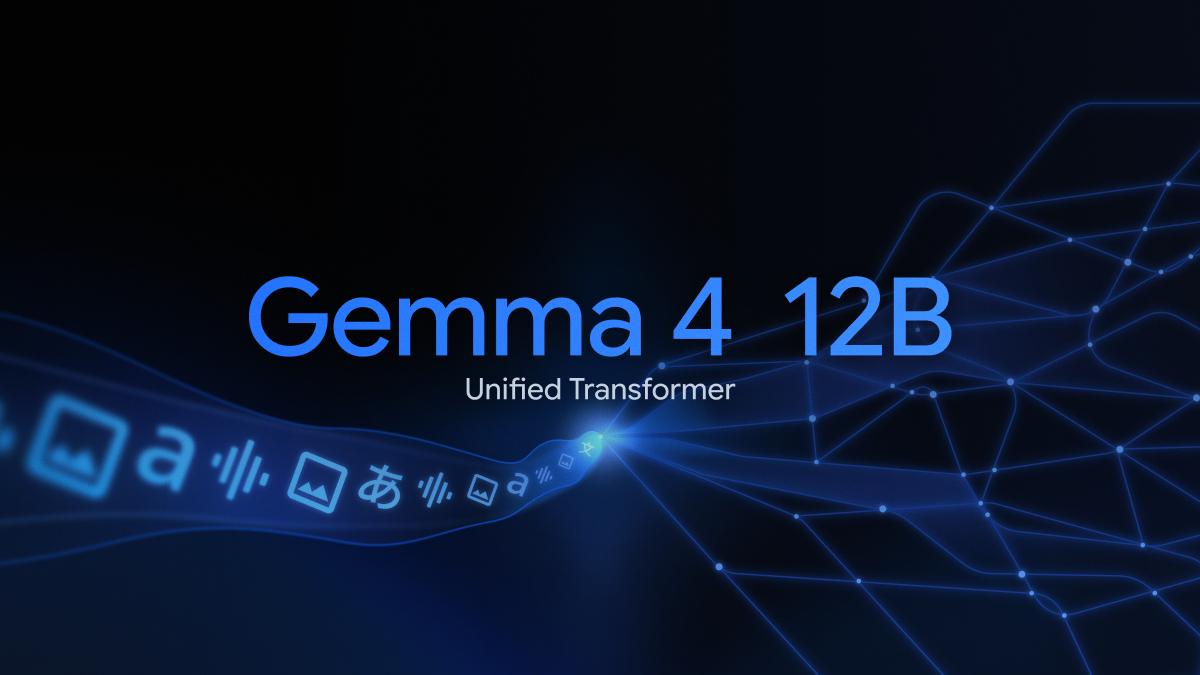
“DeepMind introduced Gemma 4 12B, a unified multimodal model that processes text and images without separate encoder components. This architecture simplifies design while maintaining efficiency, representing progress toward more integrated AI systems. The development suggests a shift toward unified architectures over modular approaches in multimodal AI.”
Key Takeaways
- Gemma 4 12B eliminates separate encoder components for a unified architecture.
- The model handles multiple modalities efficiently in a compact 12B parameter size.
- Encoder-free design reduces complexity while maintaining multimodal reasoning capabilities.
DeepMind unveils Gemma 4 12B, a streamlined multimodal model without separate encoders.
trending_upWhy It Matters
Unified multimodal architectures represent an important evolution in AI model design, potentially improving efficiency and reducing computational overhead. Simpler architectures can accelerate adoption across diverse applications and make advanced AI more accessible. This development reflects broader industry trends toward more elegant, integrated solutions rather than complex modular systems.
FAQ
What does 'encoder-free' mean in this context?
It means Gemma 4 12B processes all modalities directly without separate specialized encoder components, simplifying the overall architecture.
How does the 12B parameter size compare to other multimodal models?
12B parameters represents a relatively compact size for multimodal models, making it efficient while maintaining strong performance across text and image tasks.