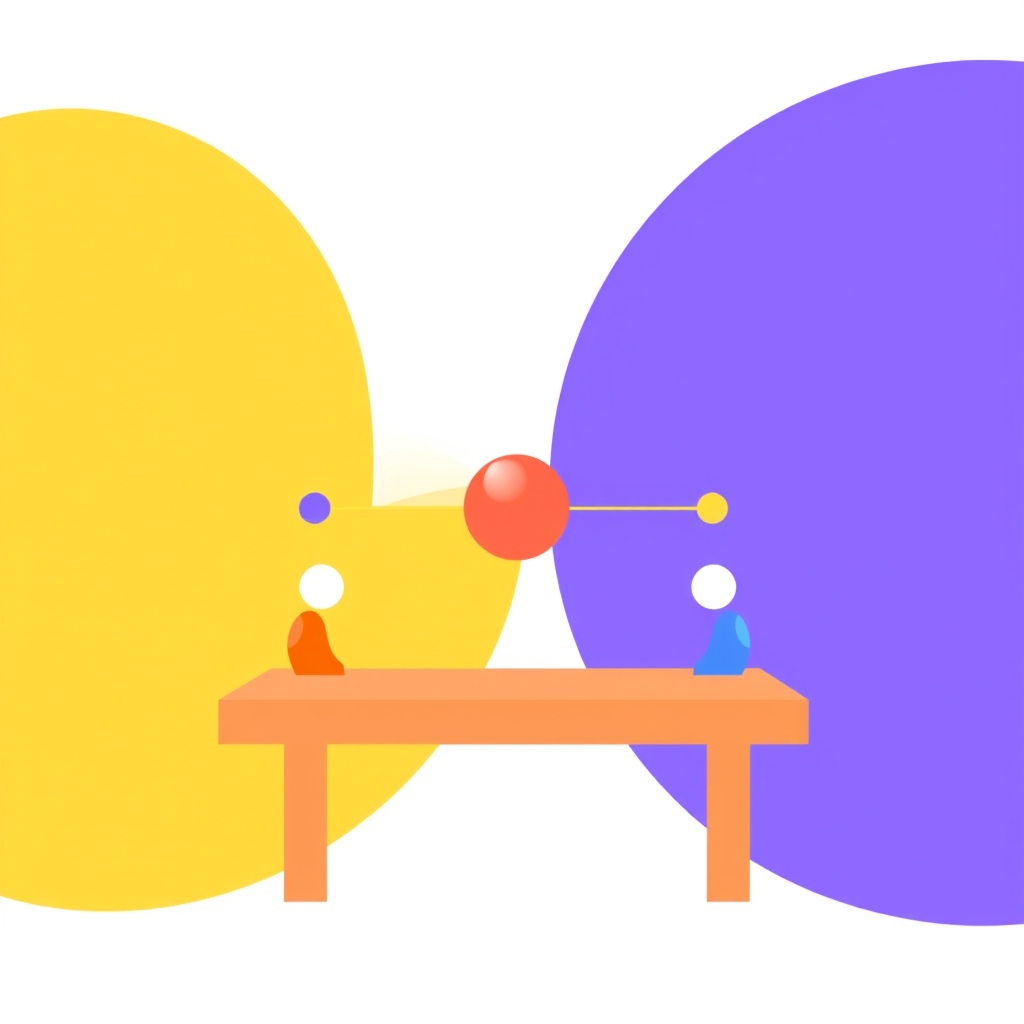
“Researchers present a game-theoretic model for human oversight of AI agents when both parties have private information—humans hide reward preferences while AI agents know action quality humans can't assess. This addresses real-world scenarios like autonomous robots making decisions supervisors cannot directly evaluate, building on cooperative inverse reinforcement learning principles.”
Key Takeaways
- Studies human-AI oversight with two-sided information asymmetry, mirroring real autonomous systems
- Humans privately know their preferences; AI knows action quality assessments
- Extends cooperative inverse reinforcement learning to handle mutual information hiding
New framework tackles human-AI collaboration with mutual information asymmetry.
trending_upWhy It Matters
As autonomous systems like robots and software agents increasingly make decisions humans cannot fully evaluate, this research provides crucial theoretical foundations for trustworthy human-AI collaboration. The framework addresses a critical real-world problem: effective oversight when both parties have incomplete information about each other. This has immediate applications for robotics, autonomous vehicles, and AI assistants operating in complex environments.
FAQ
When would this two-sided information asymmetry occur in practice?
When an autonomous robot inspects a hazardous environment or assesses data a human supervisor cannot directly access, creating situations where the AI knows action quality while the human's true preferences remain private.
How does this differ from standard AI oversight approaches?
Traditional oversight assumes humans fully understand the situation; this framework accounts for scenarios where humans genuinely cannot assess what the AI has already evaluated.


